Skip to content

Official distributor in Thailand

FM3 Buddha Machine

A nine-loop sound box from Beijing

A small plastic box holding nine loops of sound. Switch it on and it plays forever. No stop button, no playlist — just a slider to change the loop and a dial for volume. FM3 made the first one in 2005, and musicians, designers and shopkeepers have been passing it between themselves ever since.

FM3 Buddha Machine

Which brings you here

Sound samples are being prepared. Write to us in the meantime and we will send you a recording.

The story of the box

Late 1980s · Xiamen

Chanting with nobody chanting

Christiaan Virant was a language student in Fujian province. He liked to walk up the hill to the local Guanyin temple early in the morning to listen to the nuns chant. One morning the chanting sounded wrong, and when he arrived there was nobody there at all. The sound came from an old answering machine tucked behind the statue, a tape loop turning inside it.
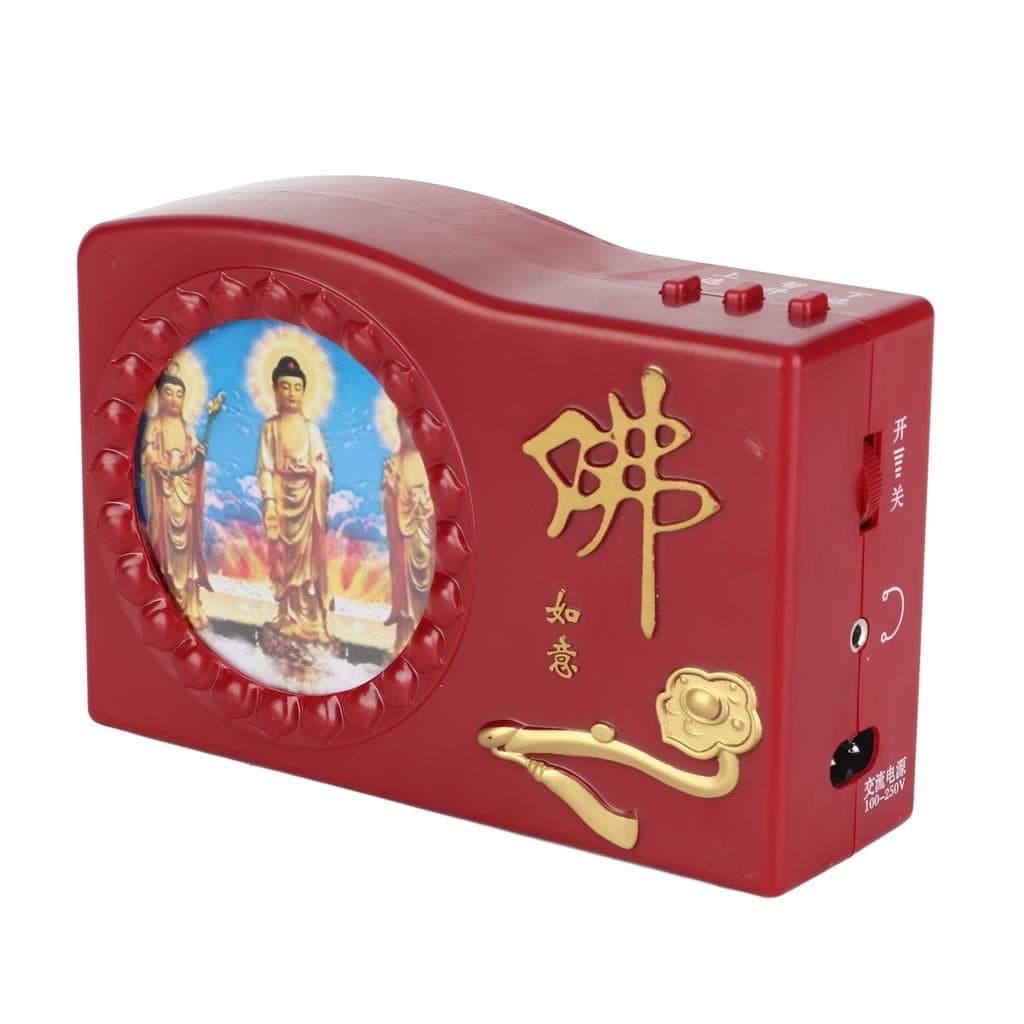
1991

A box they never made to sell

Years later he asked after such a device at a temple booth and was shown a niànfó jī — a black chanting box holding about eight chants, very lo-fi, perhaps eighty seconds of sound. Factories in Taiwan had repurposed a short-duration voice recorder into it, and they did not sell them. They gave them away to the faithful.

A box they never made to sell

1990s · Beijing

The joke everyone made

He bought two, gave one to his mother and put the other in the bathroom of his Beijing flat — which by then had become a rehearsal room for punk and post-punk bands. Every musician who heard it said the same thing: you should make an album in that box.

2004

The first five hundred

After a European tour, FM3 — Virant and Zhang Jian — finally did it. Memory chips then were still pressed as whole wafers, so you could not order one of anything. They meant to make five hundred units but had to put down a deposit as if ordering thousands, and borrowed the money from a friend. The loops inside were cut from live recordings made on that tour.

A quirk of manufacturing

The red nobody asked for

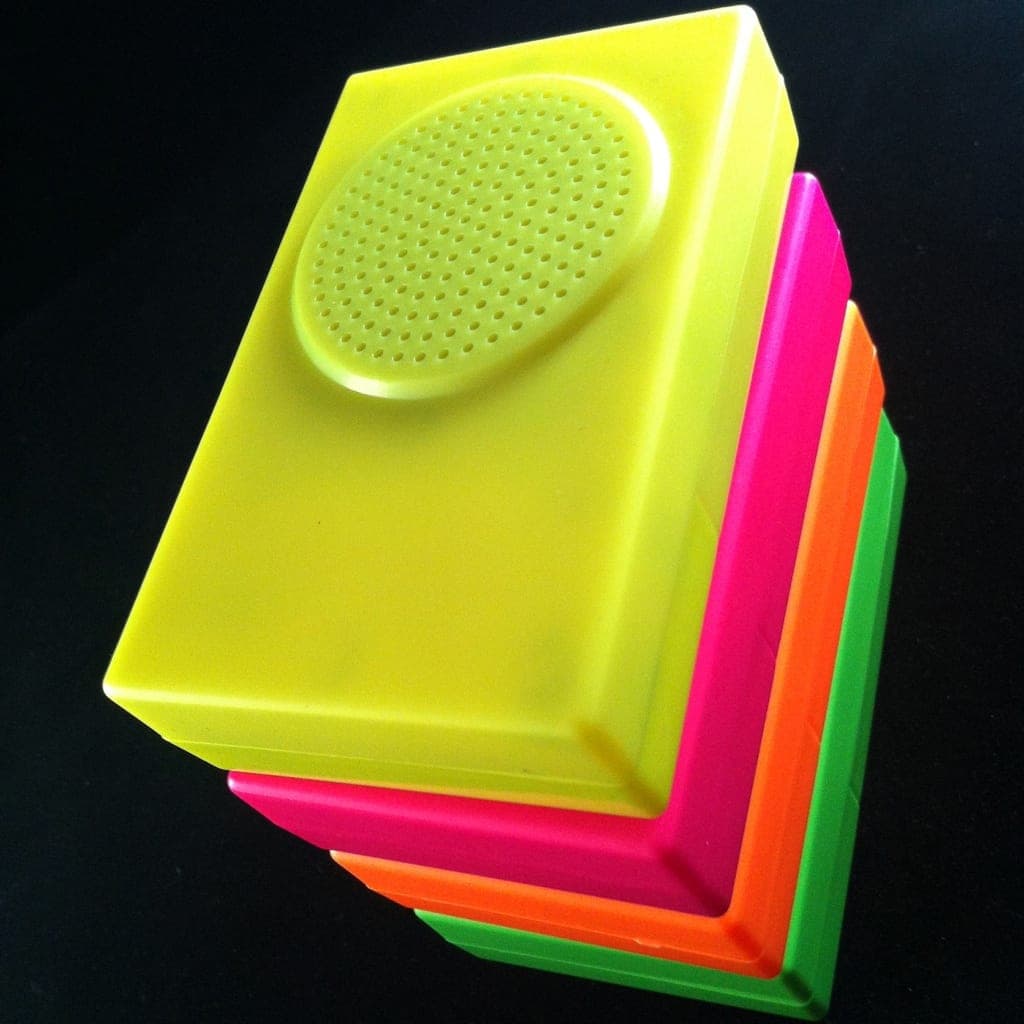
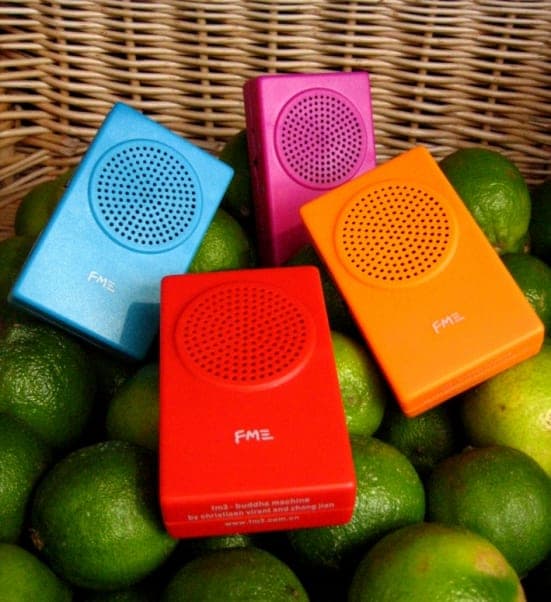
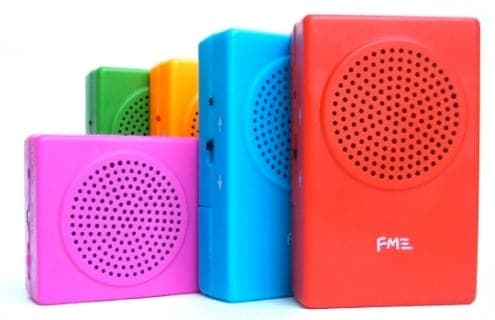
The design was meant to be a plain black case. A slip at the factory turned that batch out in a bright plastic red, the kind of red a 1970s toy was made in. They let it stand — and that is where the Buddha Machine's run of colours began.

The red nobody asked for

March 2005 · Beijing

The first customer was Brian Eno

The day Virant received the first and only prototype — a red unit with nine loops, sitting in his pocket — happened to be the day a friend brought Brian Eno along to dinner. He took it out to show him. Eno wrote his home phone number, his home address and a mobile number on a piece of paper and handed it back.

The first customer was Brian Eno

2005 onwards

Out of Beijing

Eno talked it up. David Byrne wrote about it in his book. A senior editor at The Wire saw FM3 play their first Buddha Machine set at Club Transmediale in Berlin and the magazine led with it the following issue. The New York Times put it in its end-of-year buying guide. At the peak, two thousand units a week were leaving Hong Kong.

Out of Beijing

Since then

Artists who commissioned their own

Throbbing Gristle, Cornelius and Philip Glass have all had limited runs made. The Glass edition came out to mark his eightieth birthday in January 2017, and people still gather to modify and show off machines of their own.

“Visit me in London and bring me four.”
— Brian Eno, after trying the first prototype

Timeline

  1. 1991First encounter with the niànfó jī chanting box
  2. 2004After a European tour, the idea finally becomes a project
  3. 2005The first Buddha Machine, nine loops, leaves Beijing
  4. 2007Monolake's Layering Buddha, made entirely from Buddha Machines, shows at Prix Ars Electronica
  5. 2008The second version adds a pitch dial; an iPhone app follows
  6. 2010Chan Fang 禅房, built on guqin recordings; the iPad app reaches the Top 10 in several countries
  7. 2012The third version
  8. 2017The Philip Glass edition marks his eightieth birthday

Drawn from Mike McGrath-Bryan's interview with Christiaan Virant in Bandcamp Daily · Read the original feature

Why people keep them

  • Each loop runs a different length, so two boxes playing together never repeat the same pattern.
  • The 8-bit roughness is deliberate, not a shortcoming.
  • Nothing to connect or pair. Switch it on and it simply stays on.
  • The sound mixes with the room until it becomes that room's own atmosphere.

Models available

Model details and prices are being prepared. Please ask us directly in the meantime.

ARTSELLAR is the distributor in Thailand. Every unit is imported directly from FM3.

Where people put them

Where people put them

  • Cafés and restaurants tired of looping the same playlist
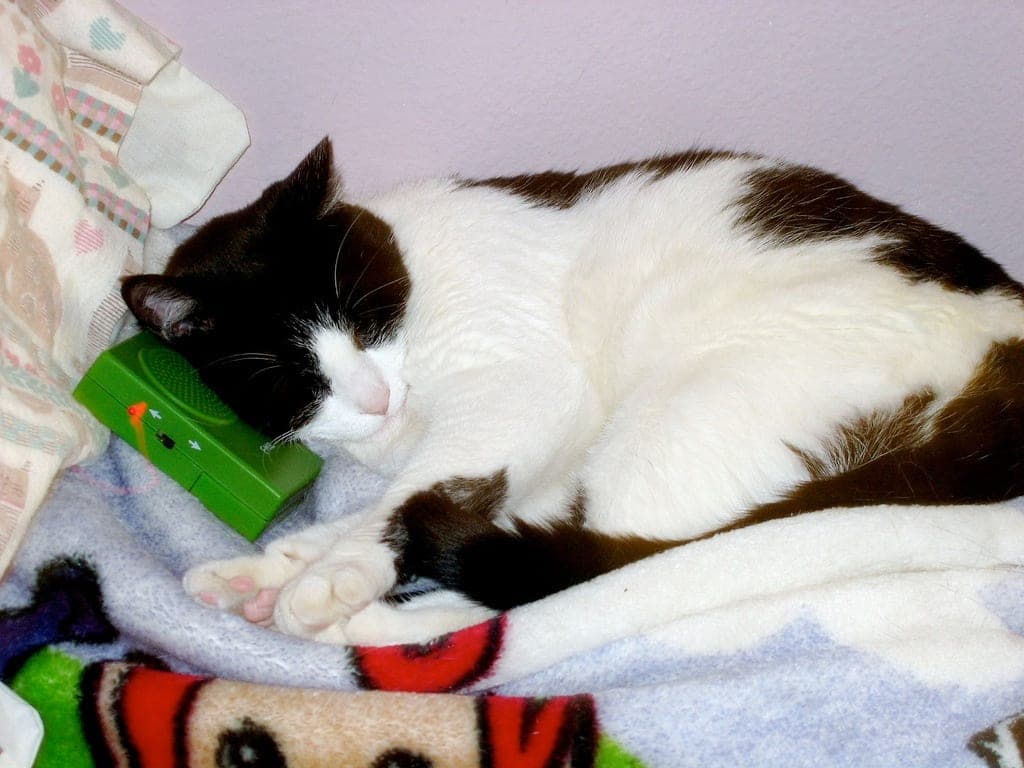
  • Bedrooms and reading corners
  • Studios and rehearsal rooms
  • Meditation rooms and quiet spaces
  • Shops and galleries that want sound without intrusion

Common questions

Is it genuine?
Yes. ARTSELLAR is the distributor in Thailand and every unit is imported directly from FM3, not one of the copies that circulate on general marketplaces.
What does delivery cost?
Orders of two units or more ship free anywhere in Thailand. A single unit is charged at cost. We always confirm the total before you pay.
How do I pay?
Send the order form first. We reply with the total and the transfer details. Nothing is due until you have our confirmed total.
Can I have a tax invoice?
Yes. Prices shown here include VAT. Send your company name and tax ID with the order.
Can I sell these in my own shop?
Yes — either on consignment with nothing to pay up front, or bought outright at a trade price. The page for shops has the details.